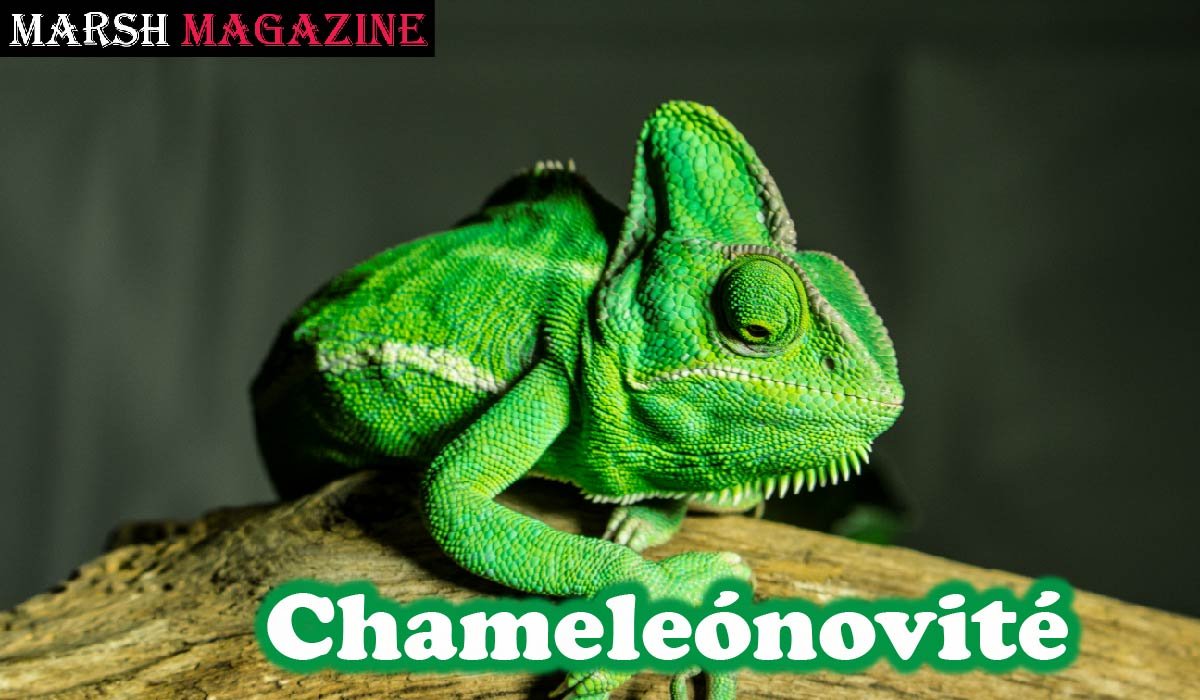
Chameleónovité refers to the reptile family Chamaeleonidae, a group of remarkable lizards known for extraordinary adaptations and visual abilities. This family includes more than two hundred species that live mainly in Africa, Madagascar, parts of Europe, and sections of Asia. These reptiles attract attention because they change color, move their eyes independently, and capture prey using lightning-fast tongues.
Scientists classify them among the most specialized reptiles on Earth. Their bodies evolved for life in trees and shrubs, where gripping feet and flexible tails provide stability. Many species display crests, horns, or casque-shaped head structures that add to their unique appearance. In addition, their skin contains complex layers of cells that allow rapid color adjustments. These changes help communication, temperature control, and camouflage.
What Are Chameleónovité?
Chameleónovité describes the reptile family Chamaeleonidae, which includes all true chameleons. These arboreal lizards live primarily in warm climates where vegetation offers climbing surfaces and insect prey. Most species inhabit trees or dense shrubs. Their anatomy supports this lifestyle through specialized gripping feet and flexible tails. The animals remain famous for color-changing abilities, though those changes also signal mood, temperature, and social status. Each eye moves independently, creating nearly panoramic vision.
When prey appears, both eyes focus forward to judge distance accurately. A long muscular tongue then launches forward with remarkable speed. The tongue tip sticks to prey and retracts instantly. These adaptations make chameleons highly effective ambush predators. Their slow, swaying movements also mimic leaves in wind, which improves camouflage. Combined together, these features define one of nature’s most distinctive reptile families.
Scientific Classification of Chameleónovité
Biologists classify chameleons within the reptile world using a hierarchical taxonomy system. The classification begins with the kingdom Animalia, which includes all animals. Next comes the phylum Chordata, representing animals with spinal cords. The class Reptilia contains reptiles such as snakes, lizards, and turtles. Within this class lies the order Squamata, which groups snakes and lizards together.
Scientists then place chameleons in the suborder Iguania, a branch known for visually oriented reptiles. Finally, the family Chamaeleonidae includes all chameleon species. This lineage highlights evolutionary relationships with other lizards while emphasizing unique characteristics. Chameleons share ancestry with iguanas and agamid lizards. However, their independent eyes, gripping feet, and ballistic tongues set them apart from all relatives.
Evolution and Origins of Chameleónovité
Evolution shaped chameleons into one of the most specialized reptile groups. Fossil evidence suggests early relatives appeared millions of years ago. Ancient environments likely included dense forests and warm climates. These habitats favored animals that climbed branches and hunted insects. Over time, natural selection favored gripping toes, prehensile tails, and camouflage abilities.
Madagascar became a major center of chameleon diversification. Geographic isolation allowed many species to evolve independently. This process created remarkable diversity across the island. Adaptive radiation then produced rainforest specialists, mountain dwellers, and tiny leaf-litter species. Each adaptation improved survival within unique ecological niches.
Diversity of Chameleon Species
Chameleon diversity spans more than two hundred recognized species worldwide. Several genera dominate scientific discussions about this reptile family. The genus Chamaeleo contains classic species often recognized by casque-shaped heads. Furcifer includes brightly colored Madagascan species such as the Panther chameleon. Calumma species inhabit rainforest environments and often display intricate patterns.
Brookesia represents dwarf chameleons, many smaller than a finger. Meanwhile, Trioceros species live across Africa and sometimes feature horn-like projections. Size variation among species remains extraordinary. The smallest chameleons measure only a few centimeters. The largest exceed half a meter in length. Researchers still discover new species, particularly in remote regions of Madagascar.
Physical Characteristics of Chameleónovité
Chameleons display extraordinary anatomical adaptations. Their skin contains color-producing structures that generate complex patterns. Each eye rotates independently, producing nearly complete visual awareness. When prey appears, both eyes align forward for depth perception. The tongue extends rapidly and reaches impressive distances. This tongue often exceeds the animal’s body length. The feet feature two opposing groups of toes, forming strong gripping structures. These zygodactyl feet allow stable climbing on branches. The tail curls tightly around branches and acts like a fifth limb. Many species also display crests or horns. These structures serve communication or defense roles.
How Chameleons Change Color
Color change in chameleons results from specialized skin cells called chromatophores and iridophores. Chromatophores contain pigments that produce yellow, red, or brown tones. Iridophores reflect light through microscopic crystal structures. Neural signals alter spacing between crystals, which changes reflected wavelengths. Consequently, the skin displays different colors quickly. These color shifts support communication between individuals. Males display bright colors during territorial disputes or courtship. Dark tones help absorb heat during cooler conditions. Lighter tones reflect sunlight during warm temperatures. Additionally, camouflage sometimes reduces predator detection.
Also Read :
Fabswimger: Legit Platform or Something Else?
Habitat and Geographic Distribution
Chameleons occupy regions across Africa, Madagascar, Europe, and parts of Asia. Madagascar contains the greatest diversity of species. African mainland habitats include forests, savannas, and shrublands. Some species inhabit Mediterranean climates in southern Europe. Others occur in the Arabian Peninsula and India. Most species prefer environments rich in vegetation. Trees and bushes provide shelter, hunting grounds, and temperature regulation.
Behavior and Lifestyle
Chameleons usually live solitary lives. Individuals defend territories and avoid constant social interaction. Visual signals replace vocal communication. Color changes, posture, and body inflation express aggression or courtship. Slow movement forms a key survival strategy. Chameleons sway gently like leaves while climbing. This movement reduces predator detection.
Diet and Hunting Strategy
Chameleons consume mostly insects such as flies, crickets, and beetles. Larger species occasionally capture small vertebrates. Their hunting method relies on patience rather than speed. They remain motionless while observing surroundings. When prey appears, the tongue launches instantly. Sticky mucus at the tip secures the target.
Reproduction and Life Cycle
Chameleon reproduction usually involves egg laying. Females dig shallow holes and bury eggs for protection. Incubation may last several months depending on temperature. Some species give birth to live young. Hatchlings emerge fully independent and begin hunting immediately.
Ecological Role of Chameleónovité
Chameleons help regulate insect populations within ecosystems. This control prevents insect overpopulation. Birds, snakes, and mammals also rely on them as food sources. Therefore, they support balanced ecological networks. Scientists also view them as bioindicators of environmental health.
Chameleons and Human Culture
Chameleons appear in folklore, art, and symbolism worldwide. Many cultures associate them with adaptability and patience. Their biology inspires research into camouflage materials and robotics.
Chameleónovité as Pets
Certain species appear in the exotic pet trade. Panther and Veiled chameleons rank among common captive species. Owners must maintain correct temperature, humidity, lighting, and diet.
Conservation Challenges
Deforestation threatens many chameleon habitats. Climate change also alters environmental stability. Illegal wildlife trade further pressures wild populations. Conservation programs aim to protect habitats and reduce illegal collection.
How People Can Help Protect Chameleons
Individuals can support habitat protection initiatives. Responsible pet ownership reduces pressure on wild populations. Conservation education raises awareness about reptile biodiversity.
Fascinating Facts About Chameleónovité
Chameleon tongues accelerate faster than many sports cars. Some species measure less than three centimeters. Their eyes move independently with near panoramic vision. Color change occurs within seconds.
Conclusion
Chameleónovité represent one of the most remarkable reptile families in the natural world. Their evolutionary adaptations include color-changing skin, panoramic vision, and lightning-fast feeding systems. These reptiles contribute to ecosystem balance through insect control and food chain interactions. However, habitat destruction and illegal trade threaten several species. Protecting forests and promoting conservation awareness remain essential for their survival. Chameleónovité demonstrate how evolution can create extraordinary biological innovations.
Frequently Asked Questions
What does Chameleónovité mean?
Chameleónovité refers to the reptile family Chamaeleonidae, which includes all true chameleon species.
How many chameleon species exist?
Scientists recognize more than two hundred species worldwide.
Why do chameleons change color?
Color changes communicate mood, regulate temperature, and sometimes provide camouflage.
Where do chameleons live?
Most species inhabit Africa and Madagascar, with others in Europe and Asia.
Are chameleons endangered?
Some species face threats from habitat destruction and illegal wildlife trade.
Visit For More Info : Marsh Magazine