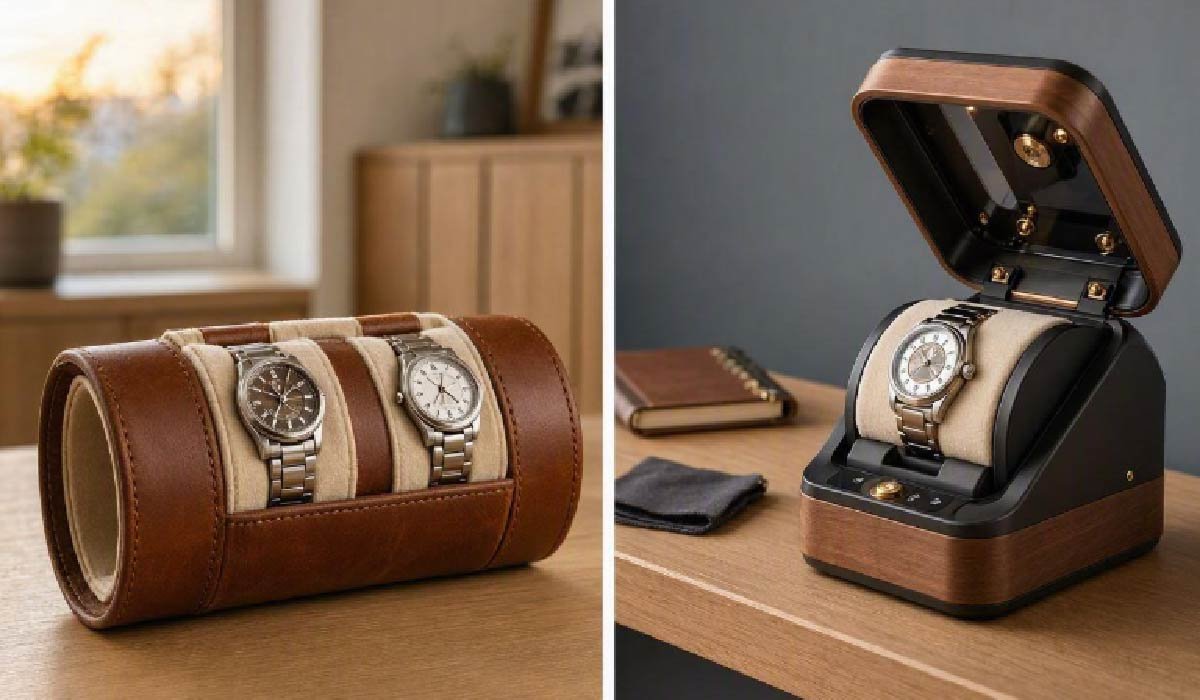
If you have spent any real money on a mechanical watch, you already know the ownership doesn’t end at the checkout. Once a watch leaves the shop, it becomes something you have to look after, and one of the first questions collectors ask is deceptively simple: should I store it in a roll, or keep it running on a winder?
The honest answer depends on what kind of watch you own, how often you wear it, and what you’re actually trying to protect against. This guide breaks down the real differences between watch rolls and watch winders, when each one makes sense, and how to avoid the mistakes that damage watches rather than protect them.
Why Storage Matters More Than People Think
A mechanical watch is a small machine with dozens of moving parts, and how it’s stored between wears affects its long-term health. Poor storage exposes a case to scratches, lets dust and moisture reach the movement through the crown, and in the case of automatic watches, leaves the mainspring sitting unused for long stretches.
None of this happens overnight. The damage from careless storage is cumulative, which is exactly why it gets overlooked until a watch needs an expensive service it didn’t have to need.
What a Watch Roll Actually Does
A watch roll is a soft, padded case designed to hold watches individually so they don’t touch, scratch, or press against each other. Most are made from leather or a leather alternative, lined with a soft material like felt or microsuede, and built with individual pillows or slots for each watch.
The main job of a roll is physical protection and portability. It’s the right choice when:
- You travel frequently and need to carry two or more watches safely
- You wear a mix of manual and automatic watches and don’t need everything wound
- You want a compact, elegant way to store a smaller collection at home
- You’re storing watches you don’t wear often and don’t mind resetting the time and date when you pick them back up
Rolls also tend to suit smaller, more personal collections better than winders do. A four-slot leather roll takes up a fraction of the space a set of winder boxes would, which matters if you’re storing watches in a drawer rather than dedicating shelf space to them. This is part of why Aevitas online store stocks options built specifically with this kind of everyday practicality in mind, including pieces designed around how women actually wear and rotate their watches day to day. If you’re building a collection with a mix of dress and everyday pieces, you can see more here for options sized and styled for that use case.
What a Watch Winder Actually Does
A watch winder is a motorized box that keeps an automatic watch’s rotor moving while it sits unworn, which keeps the mainspring wound and the watch ready to wear at any time. This matters specifically for automatic movements, since they rely on the natural motion of your wrist to stay powered. A manual or quartz watch gets no benefit from a winder at all.
A winder is worth using when:
- You own automatic watches with complications like a perpetual calendar that are genuinely tedious to reset
- You rotate between several automatic watches and don’t want to hand-wind each one before wearing it
- You want a watch ready to go the moment you pick it up, with no delay for winding or setting
Not every automatic watch needs constant winding, though. Some collectors assume a winder is mandatory for any automatic piece, when in reality a watch that gets worn two or three times a week rarely needs one. Where winders earn their keep is with complicated pieces or larger collections where manual winding becomes genuinely impractical.
Brand and movement also affect how a watch should be wound, since rotation direction and turns-per-day settings vary. Getting this wrong won’t destroy a movement, but it can cause unnecessary wear over time, so it’s worth checking the correct settings for your specific watch before you set a winder running. For a breakdown of which brands are worth considering and what separates a good winder from a mediocre one, you can find out more here.
Watch Rolls vs Watch Winders: The Direct Comparison
| Factor |
Watch Roll |
Watch Winder |
| Best for |
Manual, quartz, or occasionally worn automatics |
Automatics worn infrequently but needed instantly |
| Portability |
Excellent — designed for travel |
Poor — meant to stay on a shelf or dresser |
| Power supply needed |
No |
Yes |
| Keeps time/date set |
No |
Yes, while running |
| Space required |
Minimal |
More, especially multi-watch units |
| Price range |
Generally lower |
Wider range, can get expensive for multi-slot units |
Most serious collectors end up owning both, using a roll for travel and everyday rotation, and a winder for the automatic pieces that genuinely benefit from staying wound.
Common Mistakes That Damage Watches in Storage
A few habits cause more harm than either a roll or winder ever will:
Storing watches loose in a drawer. Metal bracelets and cases scratch each other constantly, and crystals can chip against buckles or clasps.
Leaving a winder running on the wrong settings. Running a watch at the wrong turns-per-day or direction won’t destroy it, but it adds unnecessary strain over months and years of use.
Keeping watches somewhere humid. Bathrooms and un-air-conditioned spaces introduce moisture that gradually affects leather straps, dials, and eventually the movement itself.
Ignoring service intervals because a winder keeps a watch “running.” A winder maintains power reserve, not the internal lubrication or condition of the movement. Automatic watches still need periodic servicing regardless of how they’re stored.
How to Choose Between a Roll and a Winder for Your Collection
Start with what you actually own. If your collection is mostly manual or quartz, a winder does nothing for you and a good roll is the better investment. If you own automatics with complications you dread resetting, or you simply hate wearing a “dead” watch, a winder earns its keep quickly.
Collection size matters too. A two or three-watch collection is easy to manage with a compact roll. Once a collection grows past five or six pieces, especially with a mix of automatics, most people find they need both a winder for the pieces in rotation and a roll for travel or storage of the rest.
Budget is worth being realistic about as well. A quality leather roll is a modest, one-time purchase. A good winder is more of an investment, particularly if you need multiple slots or brand-specific settings, so it’s worth buying the last one you’ll need rather than the cheapest one available.
If you’d like a deeper look at how automatic movements actually store and release energy, which explains why winding habits matter in the first place, Wikipedia’s overview of automatic watches is a solid, accessible starting point.
Final Thoughts
There’s no single right answer to the roll-versus-winder debate, because they solve different problems. A roll protects and organizes; a winder keeps automatics powered and ready. The best approach for most collectors is matching the tool to the watch rather than picking one system and forcing every piece into it. Look honestly at what you own, how often you wear it, and how much space and budget you want to dedicate to storage, and the right combination becomes fairly obvious.
FAQs
Do quartz watches need a winder?
No. Quartz watches run on a battery and don’t have a mainspring that needs winding, so a winder provides no benefit for them.
Will a watch winder damage my watch if I leave it running all the time?
Not if it’s set correctly for your watch’s movement. Using the wrong rotation direction or turns-per-day count over a long period can add minor unnecessary wear, so it’s worth confirming the right settings for your specific model.
How many watches can I realistically store in one roll?
Most rolls come in two, three, four, or six-slot versions. Choose based on your actual rotation rather than your full collection, since watches you rarely wear are often better kept in a dedicated case or safe.
Is it bad to let an automatic watch stop completely?
No, it’s completely normal. You’ll just need to reset the time and date, and possibly the day, when you wear it again. This is purely inconvenient, not damaging.
Can I use a watch roll and a winder together?
Yes, and many collectors do exactly that. Winders handle the automatics in active rotation, while a roll stores everything else and doubles as a travel case.