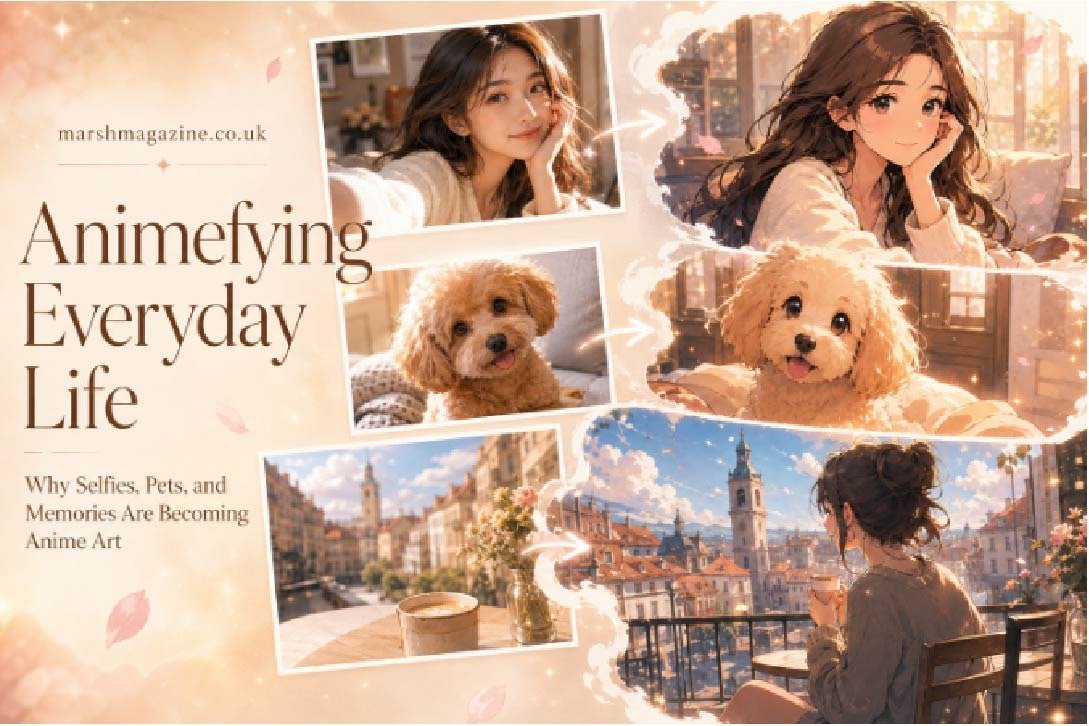
Over the past year, I’ve started noticing a pattern that goes far beyond anime fandom. People are no longer using AI image tools only for novelty or one-off experiments. They’re using them to reinterpret ordinary moments. A selfie becomes softer and more cinematic. A pet photo starts to look like a companion from an animated film. A café snapshot feels less like documentation and more like a scene.
That change says a lot about what people want from images now. They still want to remember the moment, but they also want the moment to feel a little more magical than it did in real life. That’s one reason a photo to anime converter has become such an appealing idea. It doesn’t simply retouch a picture. It gives the picture a different emotional language.
From what I’ve seen, this matters especially on social media, where people are no longer sharing images just to show what happened. They’re sharing images to express how a moment felt, or how they wish it had felt.
Anime Style Turns Daily Life Into Something More Memorable
A plain photograph can be meaningful, but it often stays literal. It records what was there. Anime-style art, by contrast, adds atmosphere. It exaggerates tone in a way that many people find emotionally satisfying. That’s why even a simple image, say, someone by a window, a couple walking outside, or a cat curled up on a blanket, can feel dramatically different once it’s reimagined through an anime lens.
I think this is part of the trend’s appeal. Anime visuals don’t just decorate reality. They soften it, intensify it, and often make it easier to revisit emotionally. A travel picture becomes more dreamlike. A pet becomes more expressive. A quiet selfie gains a touch of character and mood.
This may sound small, though in practice it changes the whole purpose of the image. People stop treating photos as flat records and start treating them as creative memory pieces.
Why This Feels Different From a Regular Filter
At first glance, some people assume this trend is just another version of social photo filters. I don’t think that’s accurate.
A normal filter usually changes surface qualities. It tweaks color, contrast, saturation, or grain. Photo-to-anime transformation goes further. It reshapes outlines, changes facial interpretation, stylizes hair and eyes, and often rebuilds the atmosphere of the scene. That makes the result feel less like “edited photography” and more like “visual reinterpretation.”
That difference matters because it explains why people are so willing to use these images as profile pictures, mood posts, couple edits, or content assets. They don’t feel like polished photos. They feel like another version of the moment.
The Emotional Appeal Is Stronger Than the Technical Appeal
Whenever trends like this appear, people often focus on the technology. I understand that impulse, but I think it misses the main point. The reason anime-style transformation spreads isn’t that the tool is clever. It spreads because the output gives people something emotionally useful.
In my own observation, anime-inspired images often offer three things at once:
| Appeal |
What people get from it |
| Softness |
A gentler, less exposed version of themselves |
| Style |
A more distinctive visual identity for online use |
| Imagination |
A way to turn ordinary life into something story-like |
That combination is surprisingly powerful. Many people want to post themselves online, but not always as a raw, literal version of themselves. Anime-style images create a middle ground. They are still personal, but they feel safer, more curated, and more expressive.
Selfies Are Only the Beginning
Selfies are the obvious use case, but they are far from the only one. In fact, some of the most charming examples I’ve seen come from other kinds of images.
Couple photos
Anime-style couple images are especially popular because they instantly feel more romantic and more stylized than the original photo. A casual snapshot can suddenly look like a frame from a love story.
Pet photos
This one makes perfect sense to me. Pets already have personality. Anime styling often amplifies that personality in a way that feels playful rather than artificial. It’s easy to understand why people love turning a cat or dog into a character-like image.
Travel moments
A street at dusk, a train ride, a café window, a seaside view, these already carry mood. Anime styling pushes that mood further, which is probably why travel photos translate so well.
Everyday lifestyle images
Mirror selfies, desk setups, cozy bedroom corners, iced coffee shots, bookstore moments, and rainy-day snapshots all gain a cinematic quality when they are treated more like scenes than like documentation.
From “This Is Me” to “This Could Be a Character”
What interests me most is where this trend starts to overlap with character creation. Some people begin with a real photo, enjoy the anime-styled result, and then realize they want to go further. They no longer want only a transformed image of themselves. They want an imagined version of themselves, or even a fully original character.
That’s where an AI anime art generator from text becomes useful. Instead of depending on an existing photo, it lets someone build from description alone. They can shape the hairstyle, outfit, expression, mood, color palette, and background from scratch.
That shift is more important than it sounds. It marks the point where image editing becomes identity creation.
Why Text-to-Anime and Photo-to-Anime Serve Different Needs
I’ve found it helpful to think of them as two related but distinct creative habits.
Photo to anime
This is ideal when the emotional starting point is a real moment. You want to preserve the memory but change the mood or visual style.
Text to anime
This is better when the starting point is imagination. You are not saying, “Turn this photo into anime.” You are saying, “Help me create a person, a scene, or a persona that doesn’t exist yet.”
Both are useful, though they speak to different impulses. One is reflective. The other is generative.
Why the Trend Fits Social Media So Naturally
The internet already rewards images that feel save-worthy, profile-worthy, and share-worthy. Anime-style visuals check all three boxes. They are recognizable, emotionally coded, and easy to use across platforms.
I also think they suit the current mood of online self-expression. Many people want a visual identity that feels personal without feeling overly exposed. They want something more interesting than a standard photo but less distant than a generic illustration. Anime art sits comfortably in that space.
It’s also easier to build a visual theme around anime-style content. Once someone finds a look they like, they can keep using similar tones for profile pictures, story posts, banners, and even content series. That kind of consistency matters more than ever.
A Few Things I’ve Learned About Getting Better Results
People often assume the output depends entirely on the tool. In reality, the input still matters a lot. A few habits make a visible difference:
- clearer photos usually produce cleaner anime transformations
- strong lighting helps preserve expression and structure
- simple backgrounds often lead to more elegant results
- for text prompts, emotional tone matters as much as physical detail
- consistency becomes important if the image is meant for a long-term profile or brand look
The biggest lesson, though, is simpler than that: know what feeling you want. Cute, nostalgic, cinematic, dreamy, playful, elegant, each one leads to a different kind of result.
Final Thoughts
What I like about this trend is that it feels less superficial than people assume. Yes, it’s visually fun. Yes, it’s easy to understand why it spreads. Underneath that, though, there is a more interesting shift taking place. People are reworking everyday life into something a little more expressive, a little more curated, and a little more story-like.
That’s why selfies, pets, and small memories are becoming anime art. Not because reality is no longer enough, but because people want their images to carry more feeling than reality alone tends to show.