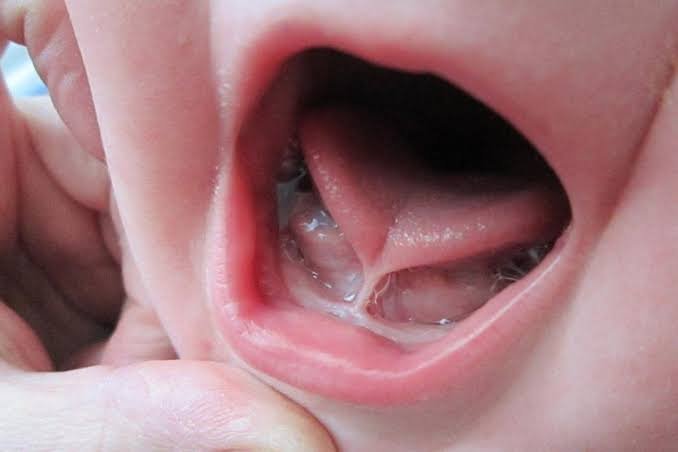
Breastfeeding can be difficult for many reasons. A baby may struggle to latch, feeds may take a long time, or nursing may be painful for the mother. Sometimes, parents are told that a tongue-tie or lip-tie could be contributing to these problems.
Tongue-tie and lip-tie are not the same, though. Research supporting a connection between tongue-tie and breastfeeding difficulties is considerably stronger than the evidence for an upper lip-tie. Understanding that difference can help parents make informed decisions about evaluation and treatment.
Can Tongue-Tie Affect Breastfeeding?
Tongue-tie, medically known as ankyloglossia, occurs when the lingual frenulum restricts the movement of the tongue.
During breastfeeding, an infant needs coordinated tongue movement to maintain a latch, create suction, and transfer milk effectively. When tongue movement is restricted, some babies may have difficulty with these mechanics.
A meta-analysis involving 5,730 infants with ankyloglossia found that 49.3% had reported breastfeeding difficulties. Poor latching was reported by 81% of mothers, while average maternal nipple pain was 4.9 on a 0–10 scale.
These findings show an association between ankyloglossia and breastfeeding difficulties, but they do not mean that every baby with tongue-tie will experience feeding problems.
What Breastfeeding Problems May Be Associated With Tongue-Tie?
The symptoms can vary from one mother-baby pair to another.
Possible breastfeeding difficulties include:
- Difficulty maintaining a deep latch
- Maternal nipple pain or trauma
- Clicking sounds during feeding
- Inefficient sucking
- Longer or more frequent feeds
- Difficulty transferring milk
- Concerns about infant weight gain
- Early breastfeeding cessation
Some mothers may also experience significant stress when feeding remains painful or inefficient.
However, these symptoms are not unique to tongue-tie. Positioning, latch technique, milk supply, prematurity, and other infant feeding factors can produce similar problems.
That is why symptoms alone should not be treated as a diagnosis.
How Does Tongue-Tie Potentially Affect Milk Transfer?
Effective breastfeeding requires more than simply getting the nipple into the baby’s mouth.
The baby’s tongue helps maintain the seal and coordinate sucking and swallowing. If tongue movement is restricted, the infant may compensate by using other oral movements or struggling to maintain suction.
This may contribute to inefficient milk transfer in some infants.
It is also possible for ineffective feeding mechanics to contribute to maternal nipple pain. In some cases, babies may swallow more air because they cannot maintain an effective seal, although reflux symptoms can have many different causes.
The important question is not simply, “Does this baby have a tongue-tie?” It is:
“Is the tongue restriction causing a functional breastfeeding problem?”
What About Lip-Tie in Babies?
The term lip tie in babies usually refers to a prominent or restrictive upper labial frenulum, the tissue connecting the upper lip to the gum.
Parents may notice this tissue when looking inside their baby’s mouth and wonder whether it explains a difficult latch, clicking during feeding, or other breastfeeding concerns.
However, the upper labial frenulum is a normal anatomical structure in infants. Its appearance alone does not establish that it is interfering with breastfeeding.
This is where the evidence differs from tongue-tie. Research has not consistently demonstrated that the appearance or grade of an upper lip frenulum predicts breastfeeding success, maternal nipple pain, or latch quality.
What Are Common Lip-Tie Baby Symptoms?
Parents searching for lip tie baby symptoms may come across long lists of feeding problems attributed to lip-tie. Some commonly reported concerns include:
- Difficulty maintaining a latch
- A shallow or slipping latch
- Clicking during feeds
- Difficulty creating a seal around the breast
- Prolonged feeding
- Maternal nipple discomfort
But these signs are not specific to lip-tie.
The same symptoms can result from positioning, latch technique, milk supply issues, prematurity, or other infant feeding challenges. Therefore, these symptoms should be viewed as reasons for a feeding assessment rather than proof of a lip-tie.
What Does the Research Say About Baby Feeding Problems Caused by Lip-Tie?
The evidence for Baby Feeding Problems Caused by Lip-Tie is considerably less established than the evidence connecting tongue-tie with breastfeeding difficulties.
Prospective studies have found no significant relationship between upper lip frenulum characteristics and breastfeeding success, maternal pain, or latch quality. Other research has suggested that factors such as maternal breastfeeding experience may play a larger role in feeding outcomes than the appearance of the upper lip frenulum.
Some small studies have reported improvements in breastfeeding or infant weight gain following isolated lip-tie release. However, these studies have important limitations, including small sample sizes and the lack of strong controlled evidence.
As a result, parents should be cautious about assuming that a visible upper lip frenulum is the cause of a baby’s feeding difficulties.
Does Every Baby With Tongue-Tie Need Treatment?
No.
A baby can have a visible or restricted frenulum without having significant functional problems.
Before considering a procedure, healthcare professionals may assess:
- The baby’s latch
- Tongue movement
- Sucking and swallowing
- Milk transfer
- Maternal nipple comfort
- Feeding duration
- Infant growth and weight gain
Skilled lactation support can also make a meaningful difference. Positioning changes, latch modification, and other feeding strategies may improve breastfeeding without surgery in some cases.
When feeding problems continue despite appropriate support, a more detailed assessment can help determine whether tongue-tie is contributing to the difficulty.
What About Frenectomy for Lip-Tie?
Frenectomy for lip tie involves removing or releasing the tissue of the upper labial frenulum.
The terminology can vary between providers, with procedures sometimes described as frenotomy, frenectomy, or lip-tie release.
The important issue is not the name of the procedure but whether there is a clearly identified functional problem that the procedure is expected to address.
Current evidence does not establish that every infant with a prominent upper lip frenulum benefits from surgical release. Professional guidance has also raised concerns about diagnosing normal oral anatomy as a pathological condition and performing procedures without clear functional indications.
For that reason, a recommendation for frenectomy should follow an appropriate clinical and feeding assessment rather than being based solely on appearance.
Is Lip-Tie Surgery Always Necessary?
No.
Lip tie surgery should not be considered an automatic treatment for breastfeeding difficulties.
Before discussing a procedure, parents can ask:
- What specific functional problem has been identified?
- Could another feeding issue explain the symptoms?
- Has skilled lactation support been tried?
- What evidence supports treatment in this particular situation?
- What improvement is realistically expected?
These questions can help parents understand whether treatment is addressing a demonstrated functional problem or simply an anatomical variation.
What Does the Research Say About Frenotomy for Tongue-Tie?
Frenotomy is different from treatment of an isolated upper lip frenulum because the evidence base for tongue-tie is more developed.
Research has reported improvements in several short-term breastfeeding outcomes following frenotomy. Studies and reviews have found reductions in maternal nipple pain and improvements in breastfeeding difficulty scores and maternal breastfeeding self-efficacy.
One study also reported an increase in measured breastmilk intake after release.
These findings can be encouraging for families experiencing significant feeding difficulties. However, frenotomy is not a guaranteed solution, and evidence about longer-term breastfeeding outcomes remains more limited.
Treatment decisions should therefore consider the baby’s actual feeding function rather than the presence of a frenulum alone.
Could Something Else Be Causing Breastfeeding Difficulties?
Yes.
A breastfeeding problem does not automatically indicate tongue-tie or lip-tie.
Possible contributors include:
- Poor positioning or latch
- Maternal nipple anatomy
- Breast engorgement
- Milk supply concerns
- Prematurity
- Infant oral-motor difficulties
- Other medical or developmental factors
A comprehensive feeding assessment can help identify the actual source of the problem.
This approach can prevent parents from pursuing an unnecessary procedure when a simpler feeding adjustment may help.
When Should Parents Seek a Feeding Assessment?
Parents may want professional support when breastfeeding remains painful or difficult despite basic latch and positioning adjustments.
Consider seeking an assessment if the baby:
- Repeatedly struggles to latch
- Makes clicking sounds during feeds
- Takes unusually long to feed
- Seems unable to maintain suction
- Has suspected difficulty transferring milk
- Has concerns about weight gain
For the mother, persistent nipple pain, bleeding, or significant anxiety around feeding are also reasons to seek help.
A lactation consultant, pediatric healthcare professional, or appropriately trained feeding specialist can help evaluate the situation and determine whether further assessment is warranted.
The Bottom Line
Tongue-tie can be associated with breastfeeding difficulties, including poor latch, maternal nipple pain, and inefficient milk transfer. In appropriately selected cases, frenotomy may improve some short-term breastfeeding outcomes.
Lip-tie is different. Evidence supporting an upper lip-tie as an independent cause of breastfeeding problems remains limited and contested. The appearance of a normal upper lip frenulum should not automatically lead to lip tie surgery or frenectomy for lip tie.
If parents notice possible lip tie baby symptoms, the best starting point is a functional breastfeeding assessment rather than assuming the frenulum is responsible.
The goal should always be to identify the actual reason for feeding difficulty, provide appropriate lactation support, and consider a procedure only when there is a clear clinical reason to do so.
Every mother-baby pair is different, so treatment should be based on individual feeding function, clinical findings, and the available evidence rather than the presence of an oral frenulum alone.
FAQs
1. How do I know if my baby’s tongue-tie is affecting breastfeeding?
Possible signs include persistent latch difficulties, nipple pain, clicking during feeds, prolonged feeding, or concerns about milk transfer. These symptoms can have other causes, so a professional feeding assessment is important.
2. What are common lip-tie symptoms in babies during breastfeeding?
Some parents report latch difficulty, clicking, or trouble maintaining a seal. However, these symptoms are not specific to lip-tie, and current evidence does not show that the appearance of an upper lip frenulum reliably predicts breastfeeding problems.
3. Does a baby with a lip-tie need lip-tie surgery?
Not necessarily. A visible upper lip frenulum is common in infants, and surgery should not be based on appearance alone. A qualified clinician should first determine whether there is a genuine functional feeding problem.
4. Can breastfeeding improve without tongue-tie or lip-tie surgery?
Yes. Latch adjustments, positioning changes, and skilled lactation support can improve breastfeeding for some babies. If difficulties continue, a healthcare professional can assess whether an oral restriction or another issue may be contributing.